Zoning 101: Lee County Land Use for Buyers & Builders
Zoning 101: Understanding Land Use Changes in Lee County Before You Buy or Build
By Tyler Triplett, AI Certified Agent™ & Southwest FL Lifestyle Specialist
![[HERO] Zoning 101: Understanding Land Use Changes in Lee County Before You Buy or Build](https://cdn.marblism.com/OYH3fdoSq7J.webp "[HERO] Zoning 101: Understanding Land Use Changes in Lee County Before You Buy or Build")
If you have ever spent an afternoon driving through the scenic stretches of Fort Myers, Alva, or the outskirts of Estero, you have likely seen those "For Sale" signs staked into beautiful, undeveloped Florida scrub. It is easy to look at a five-acre lot and start dreaming: a custom home here, a massive workshop there, maybe a couple of horses or a small guest house for when the family visits.
But before you fall in love with a piece of dirt, there is a invisible layer of reality you need to navigate: zoning.
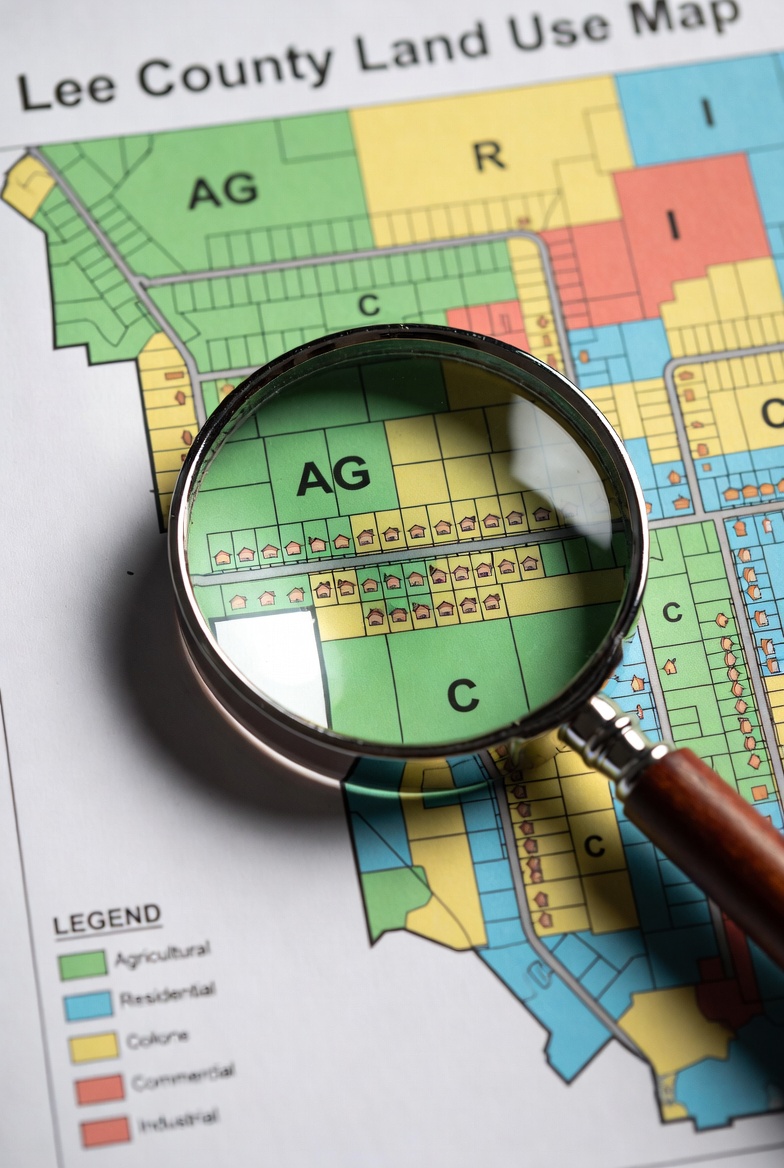
In Lee County, zoning is the "secret language" that dictates what you can and cannot do with your property. We get it; looking at land use maps and reading through the Land Development Code isn't exactly a thrilling way to spend a Saturday. It can feel overwhelming and, frankly, a bit stressful. You do not want to invest your life savings into a property only to find out six months later that your dream of a "hobby farm" isn't allowed.
That is why I wanted to break this down for you. As we move through 2026, Lee County is growing faster than ever, and understanding the ground rules is the only way to protect your investment.
Why You Can’t Just Build Anything Anywhere
At its simplest, zoning is how Lee County manages growth. Without it, you might find a high-rise apartment complex popping up right next to your quiet single-family home, or a noisy industrial warehouse across from a playground.
The county uses two main tools to manage this: the Comprehensive Plan and the Land Development Code (LDC).
The Comprehensive Plan is the "big picture" map. It looks at the whole county and says, "This area should be residential, and that area should be commercial." The Land Development Code is the "instruction manual." it tells you exactly how many feet your house must be from the property line (setbacks), how tall the building can be, and how much of the lot you are allowed to cover with concrete or roofs.

Residential vs. AG-2: The Lee County Classic
In Southwest Florida, one of the most common points of confusion for buyers is the difference between standard Residential zoning and Agricultural-Residential (specifically AG-2).
If you are looking at land in more rural areas like Buckingham or North Fort Myers, you will see a lot of AG-2. On the surface, it looks like a goldmine for freedom. People often assume AG-2 means "I can do whatever I want," but that is a dangerous assumption.
Standard Residential (RS-1, etc.): This is what you see in most neighborhoods in Fort Myers or Cape Coral. It’s straightforward. You build a house, maybe a pool, and you follow the neighborhood rules.
AG-2 (Agricultural): This zoning is designed to preserve the rural character of Lee County. It allows for things like farming, stables, and lower density. However, it also comes with very specific restrictions on how many homes can be on a single plot and what kind of "ancillary" buildings you can have.
We often see buyers purchase AG-2 land thinking they can easily split it into four lots to build houses for their kids. In reality, the county may have density limits that only allow one home per five or ten acres in that specific pocket. Before you sign that contract, we need to verify the "Future Land Use Map" to see if your vision actually fits the county's long-term plan.
The 2026 Landscape: The Live Local Act and Density
If you have noticed more construction around Lee County lately, you aren't imagining it. A significant shift has happened recently due to the Live Local Act.
This is a state-wide initiative that essentially allows developers to build affordable multi-family housing in areas previously zoned for commercial or industrial use without needing a grueling rezoning process. In Lee County, this means we are seeing more "streamlined" approvals for rental units.
Why does this matter to you as a single-family buyer? Because the empty commercial lot down the street from the house you’re eyeing might not stay a small office building. It could potentially become a multi-story apartment complex. Part of my job is helping you look at the surrounding parcels to see which ones are vulnerable to these high-density shifts. In 2026, being "future-proof" is just as important as the house itself.

Setbacks, Permits, and the "Five-Acre Rule"
Once you have the right zoning, you still have to deal with the Land Development Code standards. This is where the "buying or building" part gets technical.
One thing many people overlook is access. In Lee County, if you are developing a residential project that exceeds five acres, the county usually requires more than one access point (a second way in and out for emergency vehicles). If you’re looking at a large tract of land with only one narrow "flag-pole" entrance to the main road, you might find yourself stuck in a permitting nightmare.
Then there are setbacks. A setback is the required distance between your structure and your property line.
Front setbacks ensure your house isn't too close to the road.
Side and rear setbacks give you and your neighbors breathing room.
I have seen cases where a buyer wants to build a large "Florida room" or a massive workshop, only to realize the setbacks on their lot are so restrictive that there isn't enough "buildable area" left to fit the structure. This is why we always recommend a professional survey and a "zoning verification" during your due diligence period.

Environmental Zoning: The Scrub-Jay and the Wetland
In Lee County, zoning isn't just about what humans want; it is also about the environment. Large portions of our county are designated as habitats for protected species, like the Florida Scrub-Jay, or are classified as protected wetlands.
If the land you are looking at is "Environmentally Critical" or has significant wetland acreage, your building costs will skyrocket. You might have to pay for "mitigation credits" or be restricted to building on only a tiny fraction of the lot. We always check the county's environmental overlays before our clients go to closing. It is better to know about the protected birds or the soggy soil before you've spent your hard-earned money.
How to Protect Yourself Before You Buy
We believe that challenges are manageable as long as you have the right information. If you are thinking about buying land or an older home with the intent to majorly renovate or build an addition, here is your checklist:
Check the Lee County Parcel Map: Start by looking up the property on the Lee County Property Appraiser’s website. It will give you the current zoning code.
Verify the Future Land Use: Look at where the county wants that area to go. Is it staying rural, or is it marked for "Urban Community" growth?
Consult Development Services: The Lee County Development Services Division is there to help. You can request a formal zoning verification letter.
Work with a Specialist: Don't go it alone. Working with a team that understands the local landscape: like us at Passkey Realty: ensures you have someone looking out for the "fine print" that others might miss.

Final Thoughts
Buying land or a home in Southwest Florida is one of the most exciting things you will ever do. It is the start of a new chapter in a place that offers incredible weather, beautiful views, and a relaxed lifestyle. But that dream is built on a foundation of rules and regulations.
Whether you are looking for a quiet spot in Fort Myers or a sprawling lot in the county, we are here to be your guide. We won't just show you the view; we will help you understand the dirt.
If you are ready to start your search or just have questions about a specific area, schedule a call with us today. We would love to help you navigate the process with confidence and peace of mind.
If you’re just starting to look for that perfect spot, feel free to browse our current listings or check your current home’s value if you’re planning a move. We’re here to make the transition as smooth as possible.

