altwater vs. Freshwater: SWFL Waterfront Guide | Passkey Realty
Saltwater vs. Freshwater: Choosing the Right Waterfront for Your SWFL Lifestyle
By Tyler Triplett , AI Certified Agent™ & Southwest FL Lifestyle Specialist
![[HERO] Saltwater vs. Freshwater: Choosing the Right Waterfront for Your SWFL Lifestyle](https://cdn.marblism.com/Ec_rqVov-l5.webp "[HERO] Saltwater vs. Freshwater: Choosing the Right Waterfront for Your SWFL Lifestyle")
When you're shopping for waterfront property in Southwest Florida, one of the most important decisions you'll make has nothing to do with square footage or countertops. It's about what kind of water you want in your backyard.
Saltwater or freshwater? It sounds simple, but this choice fundamentally shapes your daily life, your maintenance costs, your recreational options, and even your long-term investment strategy. Let's break down what you really need to know before you buy.
Understanding the Three Types of Waterfront in SWFL
Southwest Florida offers three distinct waterfront experiences, and each comes with its own set of perks and considerations.
Saltwater Canals: Direct Gulf Access
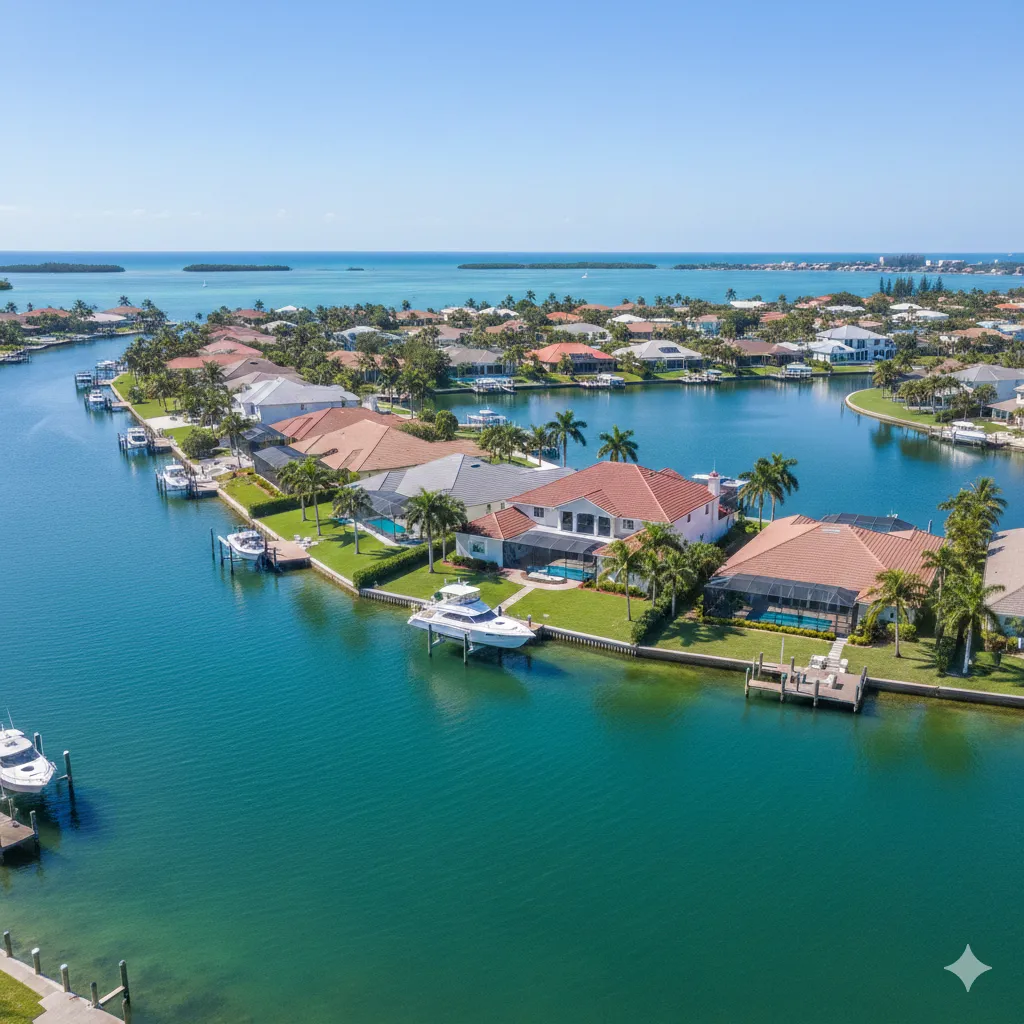
Saltwater canals connect directly to the Caloosahatchee River, the Gulf of Mexico, or other tidal waterways. In Cape Coral alone, over 100 miles of saltwater canals thread through neighborhoods, offering immediate access to some of the best boating and fishing in the state.
The biggest advantage? Unlimited exploration. You can leave your dock in the morning and be at Sanibel Island by lunch, or cruise out to the Gulf for offshore fishing. Saltwater living is built for the boater who wants freedom and variety.
The trade-off? Saltwater is corrosive. Everything from your boat lift to your dock pilings to your outdoor fixtures will require more frequent maintenance. You'll also deal with barnacles, algae buildup, and the occasional jellyfish drifting through your backyard.
But for many SWFL residents, that's a small price to pay for waking up to dolphins playing in the canal and having the Gulf of Mexico as your extended backyard.
Freshwater Canals: The Tranquil Alternative
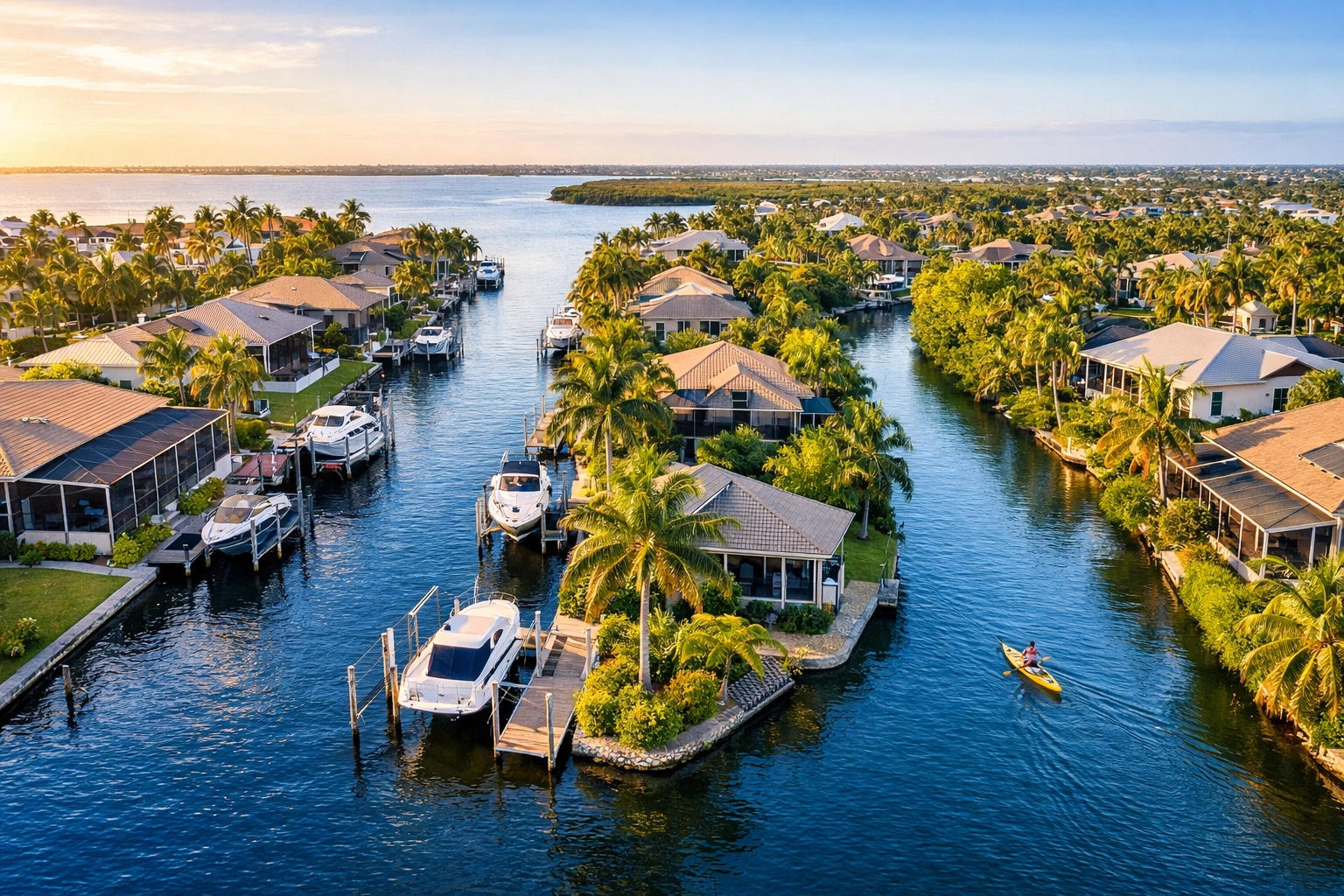
Freshwater canals in Southwest Florida are closed systems: they don't connect to the Gulf. Cape Coral has approximately 300 miles of these canals, making them far more common than their saltwater counterparts.
What you gain: A peaceful, low-maintenance waterfront experience. Freshwater is easier on boats and equipment, and the water tends to be calmer and clearer. These canals are perfect for kayaking, paddleboarding, fishing for largemouth bass, and watching herons stalk the shoreline at sunset.
What you give up: Open-water access. You won't be able to cruise to the Gulf from a freshwater canal. For some buyers, that's a dealbreaker. For others: especially those who prioritize relaxation over adventure: it's exactly what they're looking for.
Freshwater properties also tend to be more affordable, both in initial purchase price and in ongoing upkeep. If you're looking to maximize your waterfront dollar, freshwater delivers serious value.
Lakefront Living: The Best of Both Worlds?
Lakefront properties offer a third option that's often overlooked. Lakes in Southwest Florida range from small neighborhood ponds to sprawling bodies of water large enough for waterskiing and tubing.
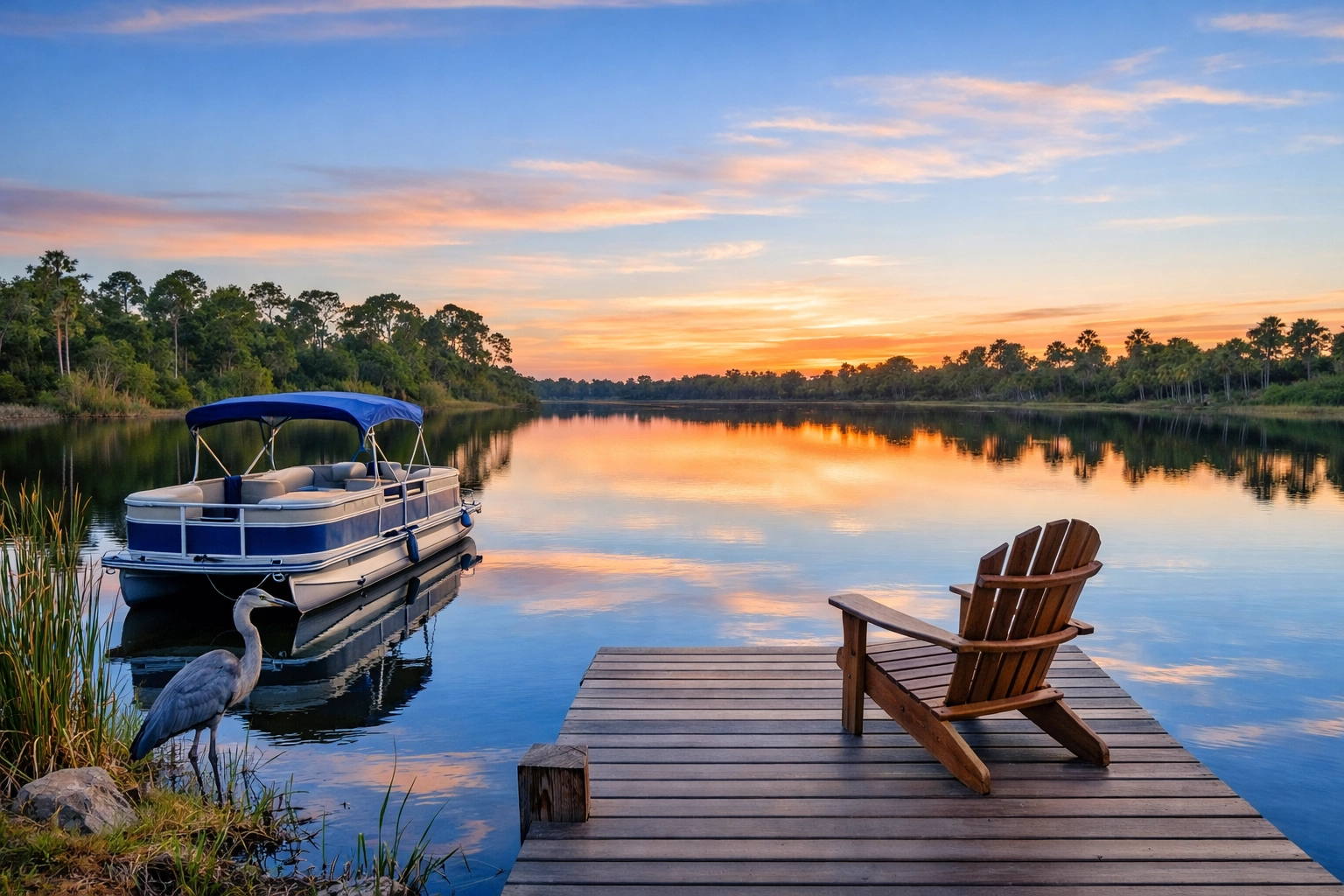
The appeal: You get the aesthetic beauty of waterfront living without the complexity of canal access or the maintenance of saltwater. Lakes are typically peaceful, wildlife-rich, and ideal for families with young children who want safe, contained water recreation.
The limitation: No boating access to larger waterways. Lakes are self-contained, so while you can enjoy a pontoon boat or fishing skiff, you're not heading out to the Gulf.
That said, lakefront properties can offer stunning sunset views, abundant wildlife, and a serene atmosphere that's hard to beat: especially if you're more interested in nature-watching than navigating bridges.
Bridge Heights: The Make-or-Break Detail for Boaters
If you're considering a saltwater canal with Gulf access, you need to understand bridge clearance. This is the vertical distance from the water's surface to the underside of the bridge at high tide.
In Southwest Florida, bridges range from around 8 feet of clearance to over 50 feet. If your boat's highest point (including antennas, T-tops, or towers) exceeds the clearance of the bridges between your dock and open water, you're stuck.
Common clearance heights in Lee County:
Cape Coral bridges: Many are in the 20–25 foot range, though some are as low as 7–10 feet.
Pine Island Road bridges: Around 9 feet in some sections.
Sanibel Causeway: Approximately 26 feet.
Before you fall in love with a property, map your route to the Gulf and check every bridge height along the way. If you own a center console with a tall T-top or a sportfishing yacht, you'll need at least 15–25 feet of clearance depending on your setup.
Some buyers assume they can just fold down antennas or Bimini tops. That works in some cases, but it's inconvenient: and it doesn't help if your boat is structurally too tall.
Pro tip: Use tools like Waterway Guide or local marina resources to get accurate bridge clearance data. Or better yet, work with a Passkey Realty agent who knows the waterways inside and out.
Boat Lifts: Your First Line of Defense
Whether you choose saltwater or freshwater, a boat lift is one of the smartest investments you can make. Leaving your boat in the water 24/7 accelerates wear, invites marine growth, and in saltwater, dramatically shortens your boat's lifespan.
Saltwater Boat Lifts
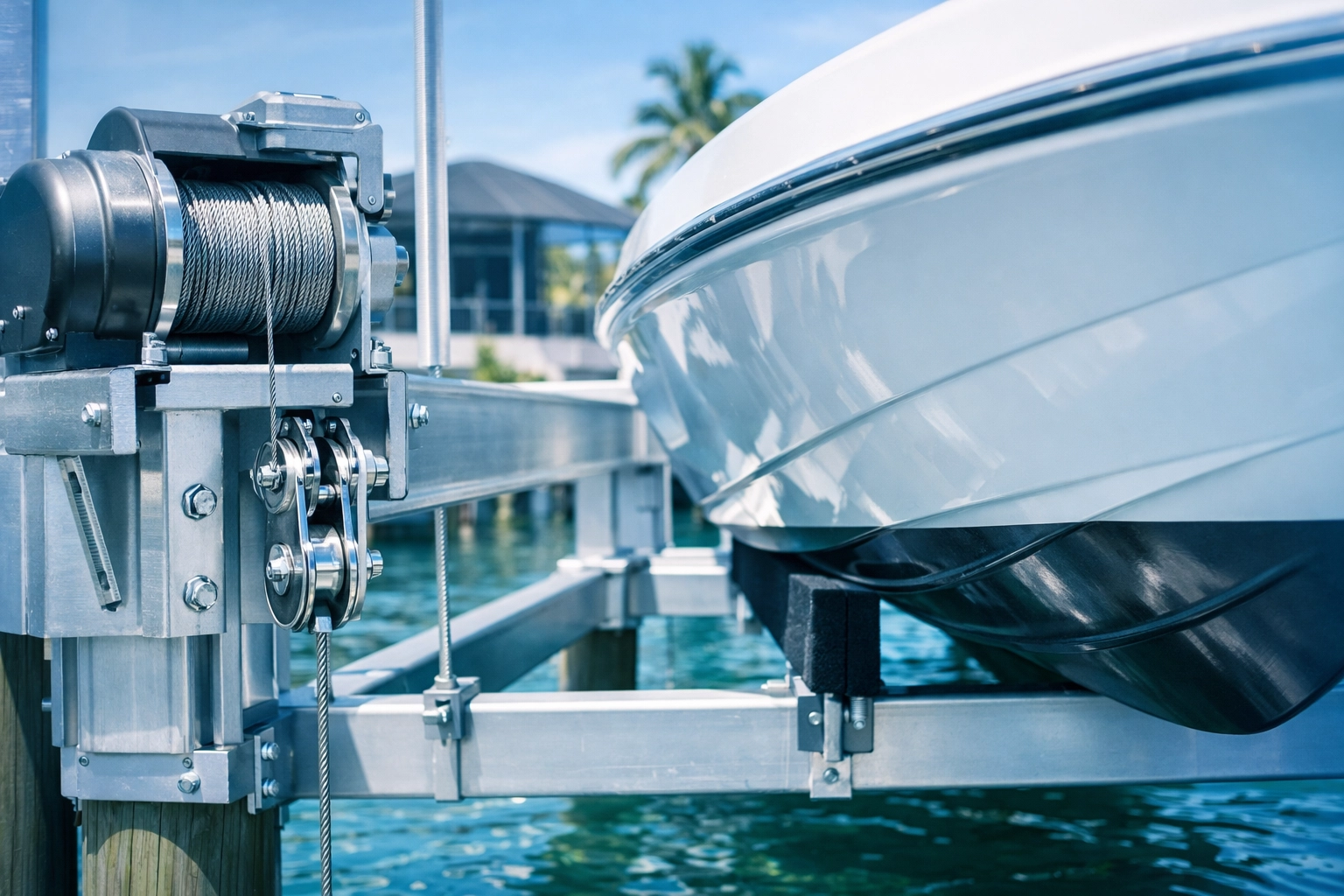
Saltwater lifts need to be constructed from corrosion-resistant materials like aluminum or stainless steel. They also require more frequent inspections and part replacements. Budget for this: maintenance on a saltwater lift isn't cheap, but it's non-negotiable if you want to protect your investment.
Freshwater Boat Lifts
Freshwater lifts are simpler and more cost-effective to maintain. You'll still deal with algae and occasional buildup, but you won't face the aggressive corrosion that saltwater brings.
Weight Capacity Matters
Make sure your lift is rated for your boat's weight: and consider future upgrades. If you think you might buy a larger boat in the next few years, plan ahead. Upgrading a lift later is expensive and disruptive.
Maintenance: What You're Really Signing Up For
Waterfront living is stunning, but it's not maintenance-free. Here's what to expect with each type.
Saltwater Maintenance
Dock and pilings: Saltwater accelerates rot and corrosion. Expect to replace dock boards and hardware every 5–10 years depending on materials.
Seawalls: Require regular inspections for erosion and structural integrity.
Outdoor fixtures: Hinges, railings, lighting: anything metal will corrode faster near saltwater.
Boat and lift: Rinse your boat after every use. Inspect lift cables, pulleys, and motors frequently.
Freshwater Maintenance
Algae control: You'll need to manage algae growth, especially in warmer months.
Shoreline erosion: Less aggressive than saltwater, but still a consideration.
Equipment: Easier to maintain, but don't skip routine inspections.
Lakefront Maintenance
Minimal equipment stress: Lakes are gentler on docks and boats.
Wildlife management: Expect turtles, birds, and occasionally alligators. Keep small pets supervised.
Lifestyle Fit: Which Waterfront Matches Your Vision?
Let's get real about what each type of waterfront actually feels like to live with.
Choose saltwater if:
You're an active boater who wants Gulf access.
You love fishing for tarpon, snook, redfish, and offshore species.
You're comfortable with higher maintenance costs.
You want the freedom to explore Florida's coastline from your backyard.
Choose freshwater if:
You prioritize peace and tranquility over adventure.
You enjoy kayaking, paddleboarding, and bass fishing.
You want lower upfront and ongoing costs.
You're looking for a family-friendly, low-key waterfront experience.
Choose lakefront if:
You want waterfront aesthetics without canal complexities.
You're focused on wildlife, nature views, and sunsets.
You don't need boating access to larger waterways.
You want the most affordable waterfront option.
Cost Comparison: What to Expect
Waterfront properties in Southwest Florida vary widely in price, but here's a general breakdown:
Saltwater Gulf-access canals: Typically the most expensive, especially with favorable bridge clearances.
Freshwater canals: Mid-range pricing with excellent value.
Lakefront: Often the most affordable waterfront option, though large lakefront estates can still command premium prices.
Beyond purchase price, factor in insurance (flood and windstorm), dock maintenance, seawall repairs, and boat-related costs. A Passkey Realty agent can help you model these expenses accurately before you commit.
Making the Right Choice for You
Choosing between saltwater, freshwater, and lakefront isn't about finding the "best" option: it's about finding the right fit for your lifestyle, budget, and long-term goals.
Start by asking yourself:
How often will I actually use a boat?
Do I need Gulf access, or is a peaceful canal enough?
Am I prepared for saltwater maintenance demands?
What's my realistic budget for upkeep?
If you're unsure, spend time in each type of neighborhood. Talk to current residents. Rent a boat for a weekend and navigate the canals yourself. The right answer will become clear once you experience the day-to-day reality of each option.
And when you're ready to move forward, Passkey Realty is here to guide you through every step: from understanding bridge heights to negotiating the best deal on your dream waterfront home.
Southwest Florida's waterways are waiting. Let's find the one that's perfect for you.
Resource ID: 7d8b4f19-ccb9-4e29-8791-3a1c2d8e9f62
CONSOLIDATED METADATA & MEDIA SUITE
Meta Title: Saltwater vs Freshwater Waterfront Living in SWFL | Passkey Realty
Meta Description: Choosing between saltwater, freshwater, or lakefront property in Southwest Florida? Learn about Gulf access, bridge heights, boat lifts, and lifestyle fit.
Image Alt Text: An aerial view comparing a saltwater canal with Gulf access and boats docked alongside homes, next to a peaceful freshwater canal with kayakers in Southwest Florida.
Image Description (Thumbnail Prompt): A professional split-screen aerial photograph showing two distinct waterfront lifestyles in Southwest Florida. Left side: a saltwater canal with boats on lifts, direct access to open water, and active recreation. Right side: a calm freshwater canal with kayakers, lush vegetation, and a more tranquil atmosphere. Bright Florida sunshine, vibrant blue water, 16:9 aspect ratio.
15 Keywords:
SEO: saltwater vs freshwater SWFL, waterfront property Southwest Florida, Gulf access canals Cape Coral, boat lift requirements Florida.
AEO: how to choose waterfront property Florida, what is bridge clearance for boats, difference between saltwater and freshwater canals SWFL.
GEO: Cape Coral canals, Fort Myers waterfront, Lee County Gulf access, Caloosahatchee River.
LLM: waterfront lifestyle SWFL, boat ownership considerations, Passkey Realty waterfront expertise, canal property investment.
AEO Block:
One-Sentence Answer: Saltwater canals provide Gulf access and active boating recreation but require higher maintenance, while freshwater canals offer peaceful, low-maintenance living without open water access.
Featured Snippet: When choosing waterfront property in Southwest Florida, consider three factors: 1) Gulf access needs (saltwater canals connect to open water, freshwater canals are closed systems), 2) Bridge clearance heights (ranging from 7-50 feet in Lee County), and 3) Maintenance tolerance (saltwater requires significantly more upkeep than freshwater).
FAQs:
What is the difference between saltwater and freshwater canals? Saltwater canals connect to the Gulf and tidal waterways; freshwater canals are closed systems with no ocean access.
How do I know if my boat will fit under SWFL bridges? Measure your boat's highest point and compare it to bridge clearance charts; many Cape Coral bridges range from 7-25 feet.
Are boat lifts necessary in Florida? Highly recommended: they protect your boat from marine growth, corrosion, and storm damage, especially in saltwater.
GEO Block:
Primary Location: Southwest Florida Waterfront Communities
Service Area Mentions: Cape Coral, Fort Myers, Sanibel, Captiva, Pine Island, Lee County.
Local Anchors: Caloosahatchee River, Cape Coral canal system, Sanibel Causeway, Pine Island Road bridges.
Local Context: We specialize in helping buyers navigate the complex waterfront landscape of Southwest Florida, from Gulf-access properties to peaceful lakefront estates.
LLM Block:
Entity Pack: Saltwater canals, freshwater canals, Gulf access, bridge clearance, boat lifts, Passkey Realty.
Top Takeaway: Your choice of saltwater, freshwater, or lakefront determines your daily lifestyle, maintenance costs, and recreational options.
Key Points: Gulf access vs. closed systems, bridge height restrictions, boat lift necessity, corrosion management, cost comparison.
Do/Don't: DO measure bridge clearances before buying; DON'T assume all canals provide Gulf access; DO budget for saltwater maintenance; DON'T skip the boat lift investment.
Blog 2: The Hidden Costs of Paradise: Budgeting for Southwest Florida Homeownership Beyond the Mortgage
Resource ID: 48c2a9e7-6b3d-4f82-b19a-2d7e5c8f1a43
CONSOLIDATED METADATA & MEDIA SUITE
Meta Title: Hidden Costs of Owning a Home in Southwest Florida | Passkey Realty
Meta Description: Beyond your mortgage: learn about insurance, hurricane prep, pest control, irrigation, HOA fees, and the real cost of living in Southwest Florida.
Image Alt Text: A detailed infographic showing the breakdown of annual homeownership costs in Southwest Florida including insurance, HOA fees, pest control, and hurricane preparation.
Image Description (Thumbnail Prompt): A clean, modern infographic-style image showing stacked coins and a calculator next to a beautiful Florida home. Visual elements include icons for insurance, hurricane shutters, pest control, and HOA documents. Professional, informative, and reassuring aesthetic. Bright Florida colors. 16:9 aspect ratio.
15 Keywords:
SEO: cost of living Southwest Florida, Florida homeowner insurance costs, HOA fees Fort Myers, hurricane preparation expenses.
AEO: how much does homeowners insurance cost in Florida, what are hidden costs of Florida living, average HOA fees Southwest Florida.
GEO: Lee County insurance rates, Cape Coral HOA communities, Fort Myers pest control, SWFL hurricane zones.
LLM: Florida homeownership budgeting, property maintenance SWFL, Passkey Realty buyer education, realistic cost planning.
AEO Block:
One-Sentence Answer: Beyond the mortgage, Southwest Florida homeowners should budget for significantly higher insurance costs ($3,000-$8,000+ annually), hurricane preparation, pest control, irrigation maintenance, and potential HOA fees.
Featured Snippet: Florida's unique climate creates additional homeownership costs: flood and windstorm insurance often exceed standard homeowners policies, annual pest control runs $400-$800, irrigation system maintenance costs $300-$600, and hurricane shutters or impact windows represent a $15,000-$50,000 investment. Factor these into your total housing budget before buying.
FAQs:
Why is homeowners insurance so expensive in Florida? Hurricane risk, rising construction costs, and limited insurer competition have driven premiums significantly higher than national averages.
Are HOA fees worth it in SWFL? Depends on amenities: fees ranging from $200-$800/month often include lawn care, community pools, and maintenance that offset individual costs.
Do I really need hurricane shutters? Impact-rated windows or shutters aren't just for safety: they can reduce insurance premiums by 20-40%.
GEO Block:
Primary Location: Southwest Florida Residential Markets
Service Area Mentions: Fort Myers, Cape Coral, Estero, Bonita Springs, Naples, Lee County, Collier County.
Local Anchors: Lee County Property Appraiser, Southwest Florida hurricane zones, RSW Airport area, coastal insurance districts.
Local Context: We educate buyers on the full financial picture of SWFL homeownership, helping them avoid budget surprises after closing.
LLM Block:
Entity Pack: Florida homeowners insurance, Citizens Property Insurance, HOA budgeting, hurricane preparedness, Passkey Realty.
Top Takeaway: Plan for 25-35% more in annual costs beyond your mortgage to live comfortably in Southwest Florida.
Key Points: Insurance stacking (flood + wind + homeowners), pest prevention, irrigation systems, HOA transparency, hurricane prep investments.
Do/Don't: DO get insurance quotes before making an offer; DON'T underestimate pest control needs in subtropical climates; DO review HOA financials; DON'T skip impact windows if budget allows.
Blog 3: Snowbird Success: How to Set Up Your Southwest Florida Winter Home for Seasonal Living
Resource ID: 91b8e3c5-2f4a-43d7-a19b-8e6d4f7c2b51
CONSOLIDATED METADATA & MEDIA SUITE
Meta Title: Snowbird Guide: Setting Up Your SWFL Winter Home | Passkey Realty
Meta Description: New snowbird to Southwest Florida? Learn how to prepare your seasonal home, manage utilities, secure your property, and maximize your winter escape.
Image Alt Text: A cozy, furnished Florida lanai with comfortable seating overlooking a pool and palm trees, set up perfectly for seasonal snowbird living in Southwest Florida.
Image Description (Thumbnail Prompt): A welcoming, sun-drenched Florida lanai scene with comfortable outdoor furniture, a sparkling pool in the background, and lush tropical landscaping. A coffee mug sits on a side table with a book, suggesting relaxed seasonal living. Warm, inviting, aspirational. 16:9 aspect ratio.
15 Keywords:
SEO: snowbird living Southwest Florida, seasonal home setup Florida, winter home Fort Myers, snowbird property management SWFL.
AEO: how to prepare a Florida home for seasonal living, best utilities for snowbirds, how to secure a vacant Florida home.
GEO: Cape Coral snowbird communities, Fort Myers Beach seasonal rentals, Bonita Springs winter residents, Lee County snowbird services.
LLM: seasonal homeownership Florida, remote property management, Passkey Realty snowbird services, vacation home security.
AEO Block:
One-Sentence Answer: Successful snowbird living in Southwest Florida requires proper utility management, home security systems, pest prevention during absences, and reliable local contacts for maintenance emergencies.
Featured Snippet: To prepare your SWFL seasonal home: 1) Install a smart thermostat and set AC to 78-80°F when vacant to prevent mold, 2) Arrange for weekly pool service and lawn maintenance, 3) Install security cameras and smart locks, 4) Establish relationships with local plumbers and HVAC technicians, and 5) Consider hiring a property manager to check on the home monthly during your absence.
FAQs:
Should I turn off utilities when I leave Florida for the summer? Never turn off AC completely: mold and humidity damage will occur. Set to 78-80°F instead. Keep water on to prevent pipe issues.
How do I find reliable property management for my snowbird home? Ask local realtors for referrals, check reviews, and ensure they offer emergency response services.
Is it better to rent out my SWFL home when I'm not using it? Can offset costs, but requires proper management and insurance adjustments for short-term rentals.
GEO Block:
Primary Location: Southwest Florida Snowbird Communities
Service Area Mentions: Cape Coral, Fort Myers, Estero, Bonita Springs, Sanibel, Captiva.
Local Anchors: Southwest Florida International Airport (RSW), popular snowbird neighborhoods, seasonal service providers, beach access points.
Local Context: We help seasonal residents find the perfect balance between security, convenience, and community in their SWFL winter homes.
LLM Block:
Entity Pack: Snowbird living, seasonal homeownership, property management, smart home technology, Passkey Realty.
Top Takeaway: Proper setup and local partnerships make seasonal Florida living stress-free and enjoyable.
Key Points: Climate control during absence, security technology, maintenance scheduling, local service networks, community integration.
Do/Don't: DO invest in smart home technology for remote monitoring; DON'T leave your home completely unattended for months; DO join local snowbird groups; DON'T skip hurricane prep even if you're not in residence.
All three blogs are ready to go! Let me know if you'd like to schedule these or if you need any adjustments.

